
HaloVault ShopOS · Market evidenceA better price starts
A better price starts
with better context.
See what supports an estimate. Then make your own buying and selling decisions.
See how it works ↓- Identify the version
- Review market evidence
- Consider condition
- Set your asking price
More than one compLook at the card.
Look at the card.
Then look at the market.
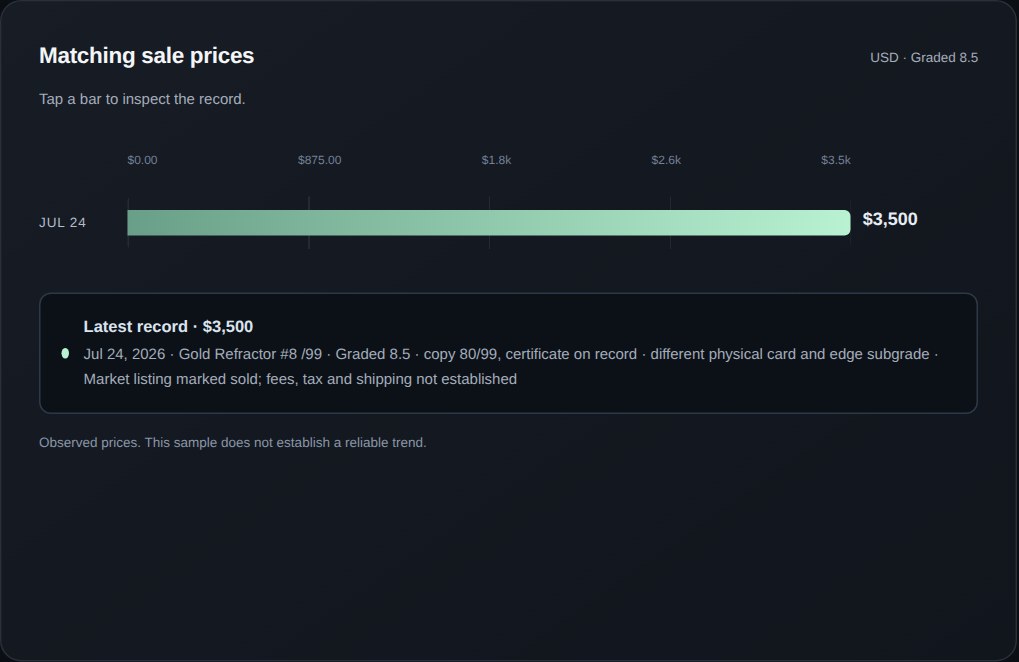
Recent market sales, related cards, rarity and player context can help build an estimate when a perfect direct comparison is hard to find.
- Check the printing, parallel and grade before comparing prices.
- Use the evidence and confidence available for the card.
- Review uncertainty instead of treating a guess as a fact.
Four numbers. Four different jobs.Know what a price
Know what a price
is telling you.
- Market estimate
- What available evidence suggests the card may be worth.
- Acquisition cost
- What you actually paid. Not recorded when it is unknown.
- Asking price
- The selling price you approve.
- Actual sale
- What the completed transaction records.
An estimated value is never a substitute for book cost or actual revenue.
Available now / controlled pilot
Card checking and market estimates are available now. Merchant asking-price controls and acquisition economics are part of the ShopOS pilot. Pricing coverage and evidence vary by card.
Bring your cards. Keep them connected.Let’s walk through
Let’s walk through
your shop.
One showcase or several stores. Start with the workflow you want to improve.
Talk about your shop
Controlled pilot enquiries. Contacting us does not activate payments, listings or shipping.
Explore HaloVault plans →