
Sell the card.
Keep the connection.
The card you buy, price and locate should be the same card your employee brings to checkout.
See how it works ↓- Find the card
- Confirm availability
- Hold
- Payment
- Sold
- Handoff
Ready for the customer.
Checked before payment.
The pilot holds the exact physical card before payment and keeps that checkout attached to one transaction.
- Another register cannot independently sell the same held card.
- A failed or cancelled payment must resolve the hold safely.
- Repeated submission recovers the transaction instead of creating another sale.
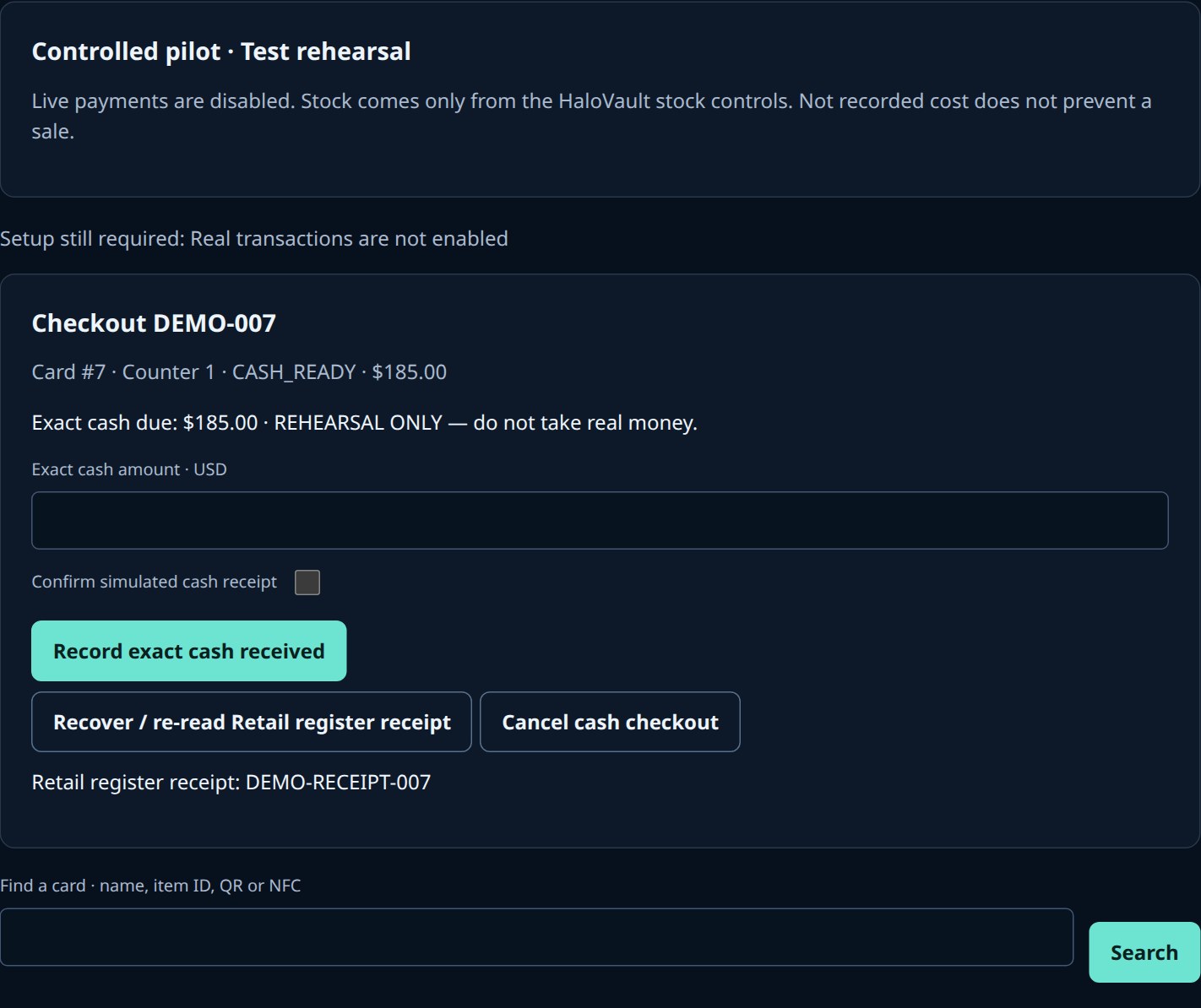
The receipt is ready.
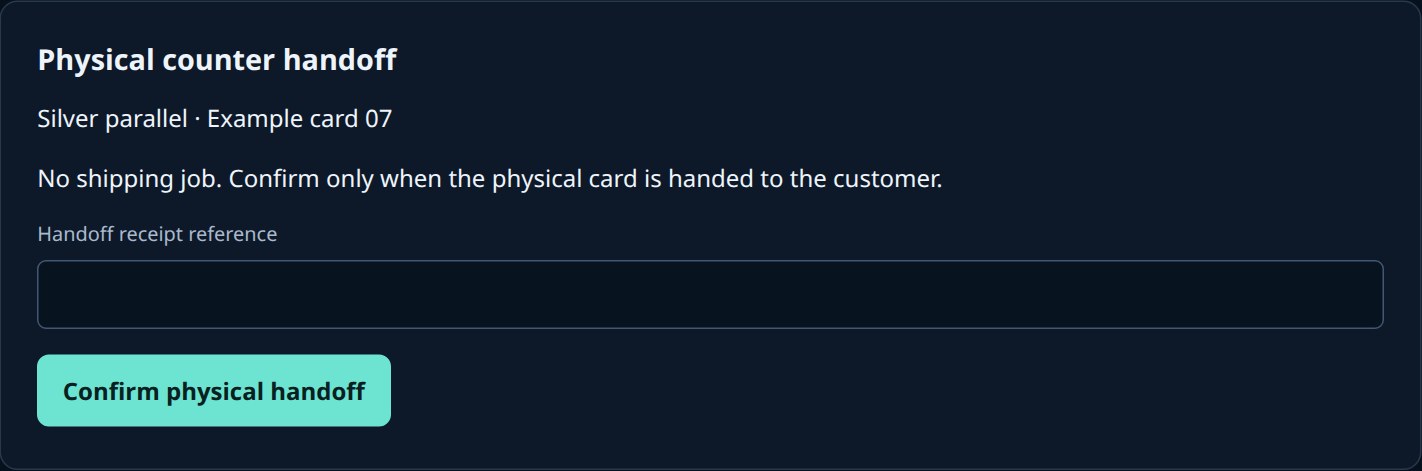
Now hand over the card.
Record the handoff when the physical card reaches the customer.
- Counter sales do not need a shipping job.
- The customer can receive a private claim path.
- Shipping follows a separate pick, pack, label and dispatch workflow; a label is not dispatch.
More places to sell.
The same physical card.
The development preview connects listing status to the card, so your team can see what is waiting, held, sold or blocked.

Review before publishing
Choose where a card belongs. Keep price approval, permissions and listing readiness separate.
Watch the next action
Know which listings need review or follow-up after a sale. External connections still need acceptance.
Keep the original
Channel listings connect to the physical card’s HaloVault identity, not a new unrelated copy.
Marketplace publishing, live online payments and unrestricted multichannel selling remain disabled. The development preview is not a promise that every channel or simultaneous selling combination is available.
Let’s walk through
your shop.
One showcase or several stores. Start with the workflow you want to improve.
Controlled pilot enquiries. Contacting us does not activate payments, listings or shipping.
Explore HaloVault plans →